

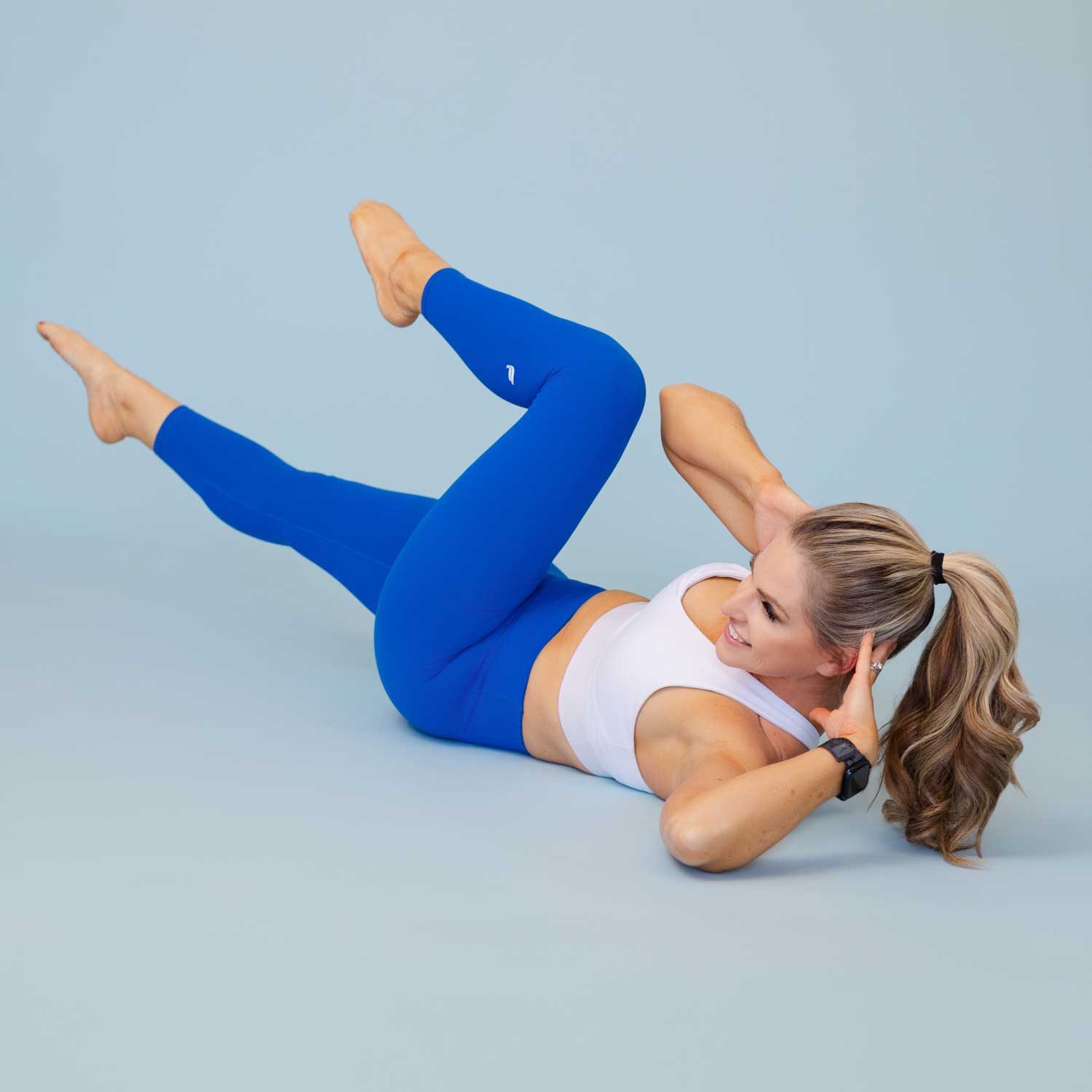
“Snatched Waist” “Six-Pack” “Washboard Abs” “Flat Stomach” “Lose the Pooch” “Tighten your Tummy” “Get rid of your Mummy Tummy.”
If you see these phrases and promises flooding your social media, you’re not alone! And while most of these phrases make me cringe, I will say, in the twenty years I’ve been a trainer, abs still dominate the conversation. And while, over the years, many trainers (myself included) have shifted to talk about CORE training and focus on strength and function, it’s no secret that “getting abs” is still a fitness goal for many.
And I’m here for it! A strong, functional core is crucial for moving effectively and safely, for building strength in all exercises, for preventing injuries and pain, and just staying mobile for the long term. While I’m not going to promise quick fixes or impossible promises (“Six-pack abs in six days!”), I am here to help you get your strongest core in the most efficient and sustainable way possible.
Spoiler: it’s not doing a million crunches or hours of planks. Nor is it a super-restrictive diet or an expensive supplement. My number one tip for strong abs isn’t an intense exercise at all: it’s alignment. Sounds simple? Or maybe overly complicated (when you hear me add in posture, engagement, and pressure management) ? It’s neither, I promise. But it is something we can all learn and can be a game-changer for core strength.
How to “Stack” Your Core for True Strength
When people think about building a strong core, they often think about exercises—planks, crunches, dead bugs, or bicycles. But before any of those movements matter, there’s something even more important:
Alignment.
If your body isn’t properly aligned, your core muscles can’t fully activate or work together the way they’re designed to. That’s where the concept of stacking comes in.
Stacking your core allows you to engage all your abdominal muscles, support your spine, and move more efficiently during workouts and everyday life.
Let’s break down what that actually means and how to do it.
What Does “Stacking” Your Core Mean?
Think of your body like a tower of blocks. Your pelvic floor is the bottom block, your diaphragm (breathing muscle) is the top block, and all our other abdominal and spinal muscles stack in between.
For the tower to remain stable and strong, each block must sit directly on top of the one below it. When one block shifts forward or backward, the whole structure becomes less stable.
Your body works the same way. When your joints and bones are stacked properly, your muscles—including your core—can work together efficiently.
It doesn’t have to be perfect; most of us also have a natural and normal spinal “S” curve, which allows for flexibility and shock absorption. When those curves become too pronounced, which can happen naturally or due to an injury, pregnancy, muscle imbalances, or work-related overuse, it can cause pain, tension, and make it hard to engage core muscles.
And let’s be honest, it won’t always be perfect— we are often moving out of alignment, carrying groceries, children, performing everyday tasks, or just seated or standing.
But, stacking your core during exercise, both core-specific exercises and upper and lower body strengthening moves, allows you to engage your ab muscles together, creating the deepest connection and strongest contractions.
Proper stacking means aligning:
- Ears
- Shoulders
- Ribs
- Hips
- Knees
- Ankles
If you’ve worked out with me before, you’ve probably heard me start many workouts with this. This alignment allows your body to distribute load properly and prevents unnecessary strain on your lower back.
The Most Important Relationship: Ribs Over Pelvis
One of the most common alignment issues is when the rib cage flares forward, and the pelvis tilts out of alignment.
When this happens:
- Your core muscles can’t engage properly
- Your lower back often overworks
- Movements become less stable.
Instead, you want to stack your rib cage directly over your pelvis.
This positioning helps your deep core muscles—like the transverse abdominis—activate and support your spine.
Helpful Cues to Engage Your Core
Sometimes alignment cues can feel abstract, so using imagery can help you connect with the right muscles.
Here are a few cues that can help:
1. Gently lift your pelvic floor (Elevator)
Using all four points of the pelvic floor muscles (the muscles that sit at the base of your pelvis), lift in and up from the pubic bone, tailbone, and sitz bones.
Imagine an elevator rising floor by floor.
Another great visual: a fishing net lifting up, or lifting a blueberry (without squishing it!)
*Try not to contract the glutes or squeeze too tightly.
2. Draw Your Hip Bones Toward Each Other (Magnets)
Imagine gently drawing the front points of your hip bones toward each other.
This helps activate the deep core muscles without gripping or clenching.
*This does not mean turning your knees inward or squeezing your glutes excessively.
3. Zip Up the Core (Zipper)
Picture a zipper running up the center of your torso from your pubic bone to your rib cage.
Slowly imagine zipping that zipper up, like a high-waisted pair of pants, without sucking in.
This cue helps you feel a gentle lift and engagement through the entire abdominal wall.
4. “Button” Your Rib Cage (Buttons)
Imagine there’s a button at the center of your rib cage.
Now, imagine gently buttoning the ribs down and together, aligning them over your pelvis.
This helps prevent rib flare and brings your core into a stronger position.
*My friend Jacquelyn and I created the acronym to help you remember this. Check it out HERE!
The Golden Rule: Don’t Suck In or Hold your breath!
One of the biggest misconceptions about core engagement is that you need to suck in your stomach or hold your breath.
Sucking in can:
- Limit breathing
- Reduce core stability
- Increase tension in the wrong muscles
Instead, aim for gentle engagement while breathing normally.
Your core should feel active but not rigid.
If you’re holding your breath, you’re likely overdoing it.
Why This Matters During Exercise
When your core is stacked and engaged properly, good things happen!
- Your spine is better supported.
- Your movements become more efficient.
- You reduce strain on your lower back.
- You can generate more strength and power during exercise.
But the benefits go beyond exercise! Proper alignment helps your body move the way it’s meant to move. As stated above, it won’t always be perfect, especially in everyday life, which is why remembering to stack and align during intentional movements (exercise) makes such a difference.
Practice Outside Your Workouts
And yes, while we want to think about stacking during workouts, it’s often easier to master the stack by practicing outside of your workout. Remember the ol’ do your kegels sitting at a stoplight? Let’s replace this with stacking while:
- Standing in line
- Brushing your teeth
- Waiting for coffee
- Sitting at your desk
Just take a moment to check in with your posture and gently stack your ribs over your pelvis. Seriously, try it now!
Over time, it becomes more automatic.
Be Patient With the Process
For many people, maintaining this alignment at first can feel difficult.
That’s completely normal.
Many of us develop postural habits from:
- Sitting at the computer
- Carrying kids
- Pregnancy and postpartum changes
- Stress and daily life patterns
Your body has learned certain patterns over the years, so it may take time to retrain.
The goal isn’t perfection—it’s awareness and gradual improvement.
The Takeaway
A strong core isn’t just about doing more ab exercises.
It starts with alignment and connection.
When you learn how to stack your core—aligning your ribs over your pelvis and engaging your deep abdominal muscles—you create the stable foundation for every movement.
With practice, this alignment becomes second nature, helping you move better, feel stronger, and keep your back and spine supported during workouts and daily life.
For true core strength and definition, for avoiding low back pain or tightness, for making the most out of ALL your exercises, it is all about alignment and core control.
*For the last several years, I’ve dedicated April and May to Core Training in the BodyFit Athletic Club Focus Groups with Absolution, Core Restore, and Hardcore, and this year we’re bringing it back with CORE 360. We’d love to have you join for your strongest core yet!

Leave a Reply