

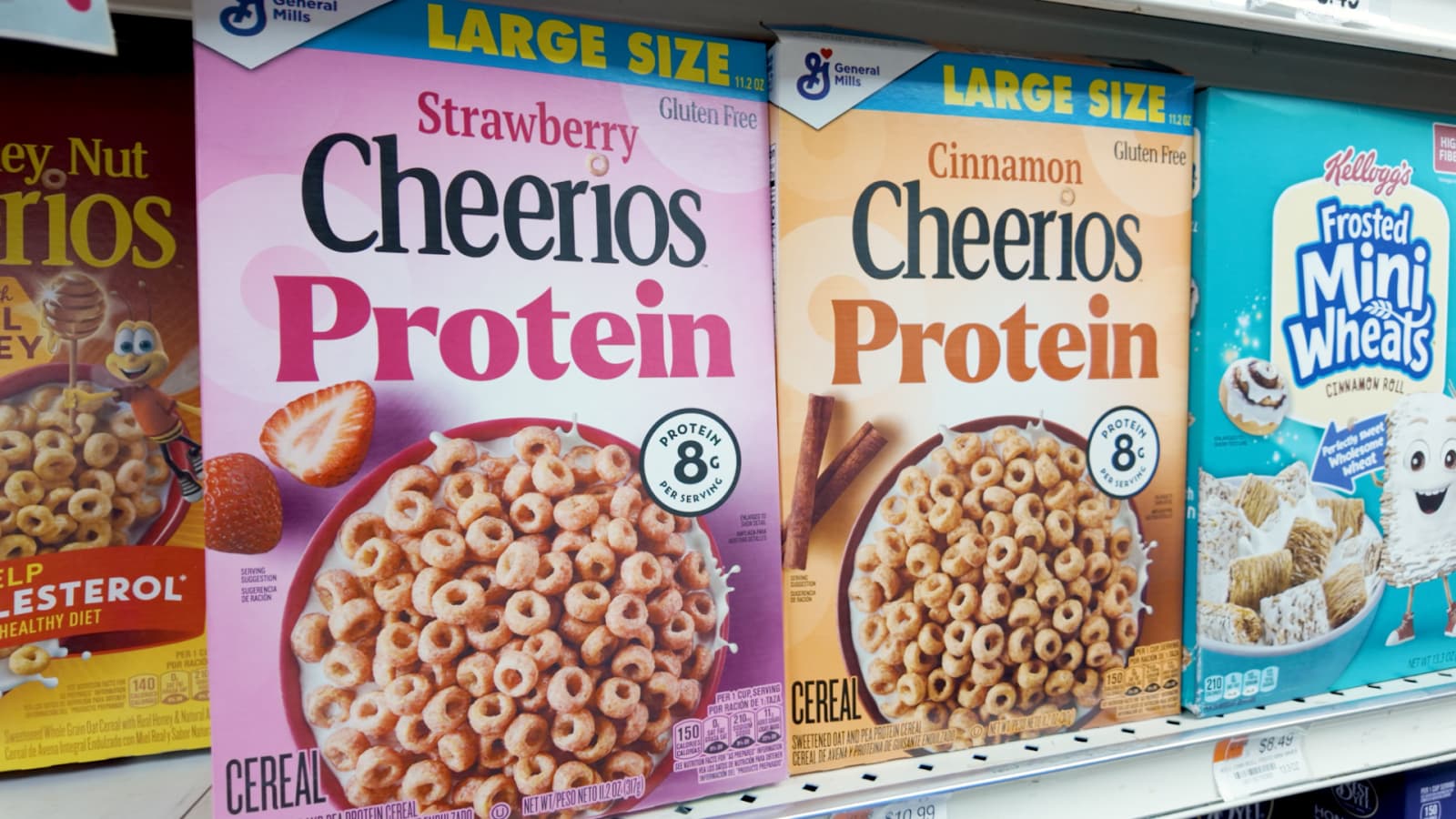
Protein is having a moment.
And by “moment,” I mean a full-blown takeover. Walk through any grocery store right now, and you’ll see it: protein everywhere.
Protein popcorn. Protein cereal. Protein bagels. Protein ice cream. Protein cookies. Protein creamer. Protein Pop-Tarts. Protein soda. Protein… wait for it… gummy bears.
Yes. Gummy bears.
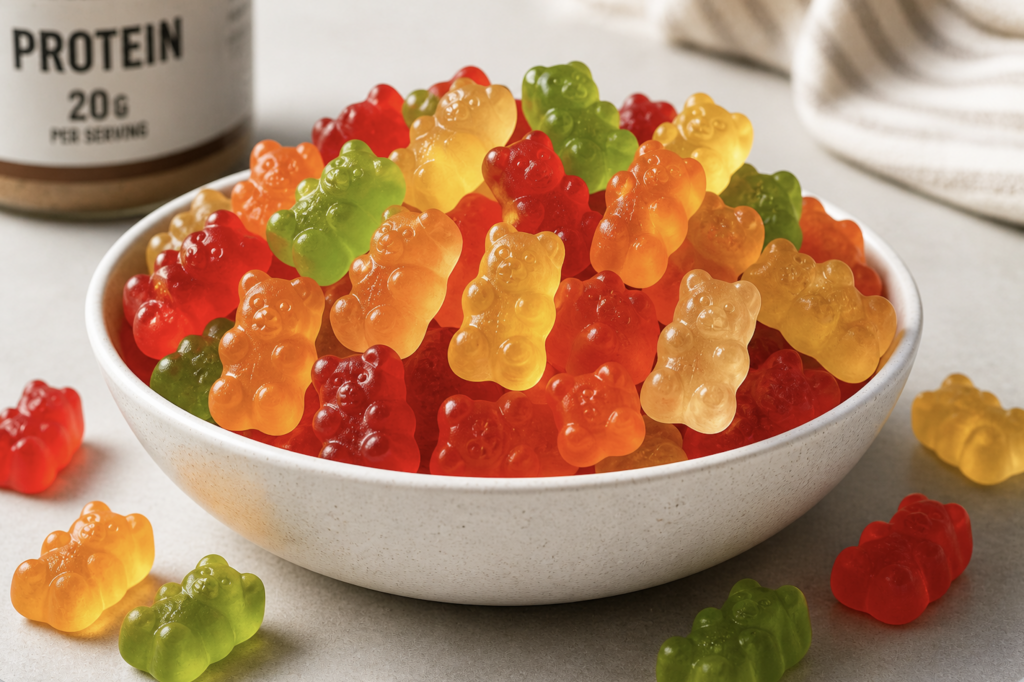
At this point, it feels like anything edible is fair game for a protein glow-up. But is this actually necessary? Are we under-consuming protein so badly that we now need protein-infused gummy bears? 🤔
Quick answer: no.
As a registered dietitian, I was actually excited when protein started trending. For years, we needed more awareness around it. But now? I’m here, kindly asking you to please put down the protein gummies and take a breath… because things have gotten a little out of hand.
In this article, I’m breaking down how much protein you actually need, whether we’re really under-eating it, and what’s driving this whole protein maxxing trend, so you can focus on what actually matters without getting caught up in the extremes.
Are We Actually Undereating Protein?
Short answer: Most people are not deficient in protein.
In the U.S., most adults meet or exceed the minimum protein requirement to prevent deficiency. So no, we are not in the middle of a protein crisis or, ahem, a war on protein.
But here’s where things were (and are!) a little off: distribution.
This is a very common eating pattern looked like this:
- Breakfast: ~10g protein (if that)
- Lunch: ~15 – 20g
- Dinner: 40 – 60g+
So while total intake might have been “enough,” it wasn’t optimally spread throughout the day. Research suggests that muscle protein synthesis is maximally stimulated within a certain range per meal (particularly at breakfast and dinner), and that range is around 25–30g of protein per meal.
That’s where the now-trendy recommendation of aiming for ~30g of protein per meal comes from. And, to be clear, I am 1000% on board with this trend.
Now, 30 grams of protein per meal is not a hard cap! It’s more of a target range that supports muscle repair, satiety, and steady energy throughout the day. You can absolutely eat more than that in one sitting, but spreading protein intake more evenly (instead of saving it all for dinner) may be more beneficial for overall health, weight loss, and body composition.
When Did Protein Become So Mainstream?
This didn’t happen overnight, but rather, it was a perfect storm of trends colliding.
First, we saw the rise of strength training and muscle-focused health messaging for both men and women. And honestly? We love that. No complaints.
With that shift, protein began to get the attention it deserved. It became more widely recognized for its role in:
- Building and maintaining muscle
- Supporting metabolism
- Helping with blood sugar balance
- Increasing satiety (aka keeping you full longer)
- Supporting body composition (fat loss + muscle retention/gain)
Then, a wave of popular content creators and health professionals brought muscle health and protein needs into the spotlight, especially for aging well and maintaining long-term strength. Again, love this!
Around the same time, the rise of GLP-1 medications added another layer to the conversation.
These medications can significantly reduce appetite, which means people may struggle to eat enough overall. And when weight loss happens quickly, especially without enough protein, there’s a higher risk of losing muscle mass along with body fat. And, in case it needs to be said: that’s not ideal.
So naturally, the message for those on weight-loss medications became: if you’re going to prioritize one thing… make it protein.
In this context, protein, especially in convenient forms like shakes or supplements, can be really helpful for people with a low appetite who need to get enough nutrition in a smaller volume of food.
But then social media platforms took that message and ran with it, which brings us to where we are today: protein maxxing.
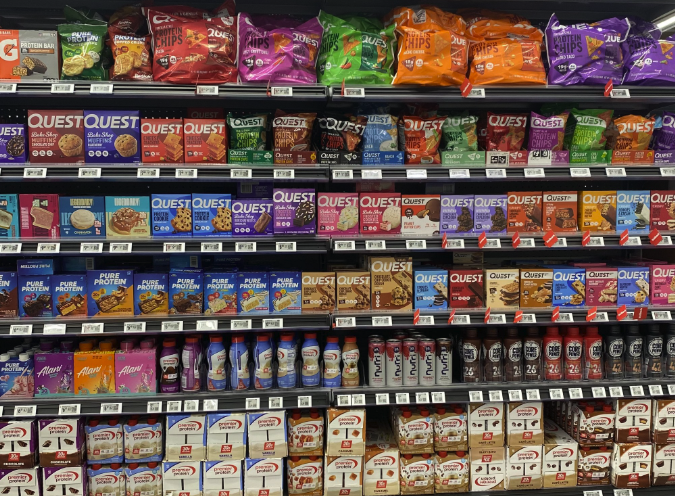
Why Is Everything in the Grocery Store “Protein-ified”?
The moment the food industry realized people were paying attention to protein, they moved fast.
Now we have “proteinified” versions of practically everything to appeal to consumers looking to increase their protein intake. And even foods that have always been naturally high in protein (like yogurt or cheese) are now stamped with bold “HIGH PROTEIN” labels to boost appeal.
So… how do I feel about all this “protein everything”?
Honestly? I like having options, and these products can absolutely be helpful. I love protein powder, and I am a fan of the Wilde Protein Chips (especially the buffalo flavor 😋).
But I’m not gonna lie… protein popcorn and protein gummy bears made me roll my eyes so hard I nearly saw the back of my head 😉
At the end of the day, whole foods are often more affordable, less processed, and more nutritious overall.
And here’s the important reminder: just because something is labeled “high protein” doesn’t automatically make it healthy. A protein cookie, for example, can still be high in added sugar and low in fiber.
So no, it’s not ideal to eat unlimited amounts of something just because the word “protein” is on the label.
A Dietitian’s Take on “Maxxing” Culture
Can I be honest? Why are we maxxing everything??? Protein maxxing. Fiber maxxing. Gut health maxxing. Looks maxxing (yes, looks… ugh, ew).
And this morning, I came across an article about… sardine maxxing.
Seriously?! Sardine maxxing? What in the actual…?
Look, sardines are incredibly nutritious, and I’d love it if more people ate them, but believe it or not, you can benefit from adding them to your diet a couple of times per week rather than “maxxing” your intake until you turn blue in the face.
Here’s the thing: extremes get attention. Balance does not.
- “Eat enough protein” doesn’t go viral.
- “Focus on protein distribution each day” isn’t exactly sexy.
- “Eat 200g of protein a day until you become a chicken breast,” apparently does.
But from a nutrition standpoint? We don’t need maxxing of anything. We just need enough.
- Protein-enough
- Fiber-enough
- Movement-enough
- Hydration-enough
Can you please join me in making those trendy?
Here’s what I’ve noticed. When we take a good idea (like prioritizing protein) and push it to the extreme, we often:
- Overcomplicate things
- Displace other important nutrients (like fiber and color)
- Create unnecessary stress around food
And that’s not the goal. Getting maximum amounts of a good thing is not the answer to health. It never has been, no matter how trendy it sounds.
We just need enough.
And right now, most of us don’t eat enough protein at breakfast, don’t get enough fiber, don’t drink enough water, and don’t move enough.
So yeah… how about ENOUGH?

Rapid Fire: Social Media Claims (From a Dietitian)
I know you’ve heard a lot of things, so let’s keep it simple: true/false, yes/no, and of course, evidence-based.
Claim: Aim for 30 grams of protein per meal
YES, I LOVE IT. Not a hard rule, but a solid target that supports satiety, energy, and muscle health when spread across the day.
Claim: Eating 30+ grams of protein at breakfast helps reduce cravings
YESSS. A higher-protein breakfast can improve fullness and may help reduce snacking and cravings later in the day.
Claim: You should include protein with meals and snacks for blood sugar balance
TRUE. Pairing protein with carbs helps slow digestion and can support more stable blood sugar levels.
Claim: You need to eat protein
YES. This one’s non-negotiable! You literally cannot survive without it.
Claim: You need 1 gram of protein per pound of body weight
NO. That’s way too much for most people.
Claim: You should stick to the minimum (0.8 g/kg)
NO. That’s the baseline to prevent deficiency, but not the optimal intake for health, performance, or body composition.
Quick interruption: how much protein is ideal?
A realistic, evidence-based range: 1.2 – 1.5 grams per kilogram of body weight per day.
Notice it’s kilograms, not pounds! Here’s an excellent (and free) protein calculator website you can use to calculate your needs: PROTEIN CALCULATOR.
And remember: distribution matters just as much as total intake. Instead of eating 10g at breakfast and 60g at dinner, aim for:
- 25 – 30 grams per meal
- At least 7 grams per snack
Claim: Protein helps with weight loss
YES. It helps you feel full (so you eat less), reduces cravings, and supports muscle mass, which is key for fat loss.
Claim: More protein automatically = more weight loss
NO. Protein still contains calories, so adding more without adjusting anything else can increase total intake.
Claim: Too much protein is bad for your kidneys
NO (for most people). In healthy individuals, higher protein intakes are safe. However, if you have kidney disease, protein intake may need to be monitored.
Claim: You need protein bars, protein powders, and “protein everything”
NO. You can absolutely meet your protein needs with whole foods (see below!). Supplements are convenient, but not required.
Claim: You need to eat at least 100 grams of protein per day
NO. There’s no universal number, but for many people, 100 grams can be a reasonable and practical target.
What Does 100g of Protein Actually Look Like Without Supplements?
Breakfast:
Greek yogurt bowl with berries + granola → ~25g
Lunch:
Chicken salad wrap + side veggies → ~30g
Snack:
String cheese + cherry tomatoes → ~8g
Dinner:
Salmon, quinoa, roasted vegetables → ~30g
Snack:
Apple + peanut butter → ~7g
Total: ~ 100g protein
What About Supplements? (A Realistic Approach)
Supplements can absolutely fit into a healthy diet, but notice how this approach uses them strategically rather than excessively.
Breakfast:
Smoothie with protein powder, fruit, milk → ~30g
Lunch:
Turkey sandwich + side salad → ~25g
Snack:
Protein chips + baby carrots → ~15–20g (varies by brand)
Dinner:
Ground beef bowl with rice + veggies → ~25g
Snack:
Greek yogurt or cottage cheese → ~15g
Total: ~100–115g protein
The Bottom Line
Protein is important. Getting enough protein is ideal, but no, you don’t need to max it.
Instead of protein maxxing, try this:
- Prioritize consistent protein at meals
- Aim for balanced plates
- Don’t forget fiber, fruits, and vegetables
At the end of the day, you don’t need protein popcorn to hit your goals. You just need enough protein consistently, and without the extremes.




Leave a comment
Hi, this is good and all but vegetarians are never included in these kind of blogs. How does protein intake look for us vegetarians? Thank you
Protein maxxing is often more about marketing than necessity most people already meet basic protein needs through a balanced diet, and the key is distribution and overall diet quality rather than extreme intake. As highlighted in the discussion, “more protein” doesn’t automatically mean better health or faster results without proper training and nutrition balance.
This connects well with broader health trends where food choices and medication driven weight management are often discussed in terms of accessibility and cost considerations https://www.pharmacyuk.com/mounjaro-price-increase-2026/
.
This article makes an important point: more protein isn’t always better. Focusing on balanced meals, adequate fiber, and overall nutrition often matters more than chasing every high-protein trend. For those exploring weight-management options alongside healthy eating habits, discussions around medication costs and access are also relevant: https://www.pharmacyuk.com/wegovy-price-increase-2026/