

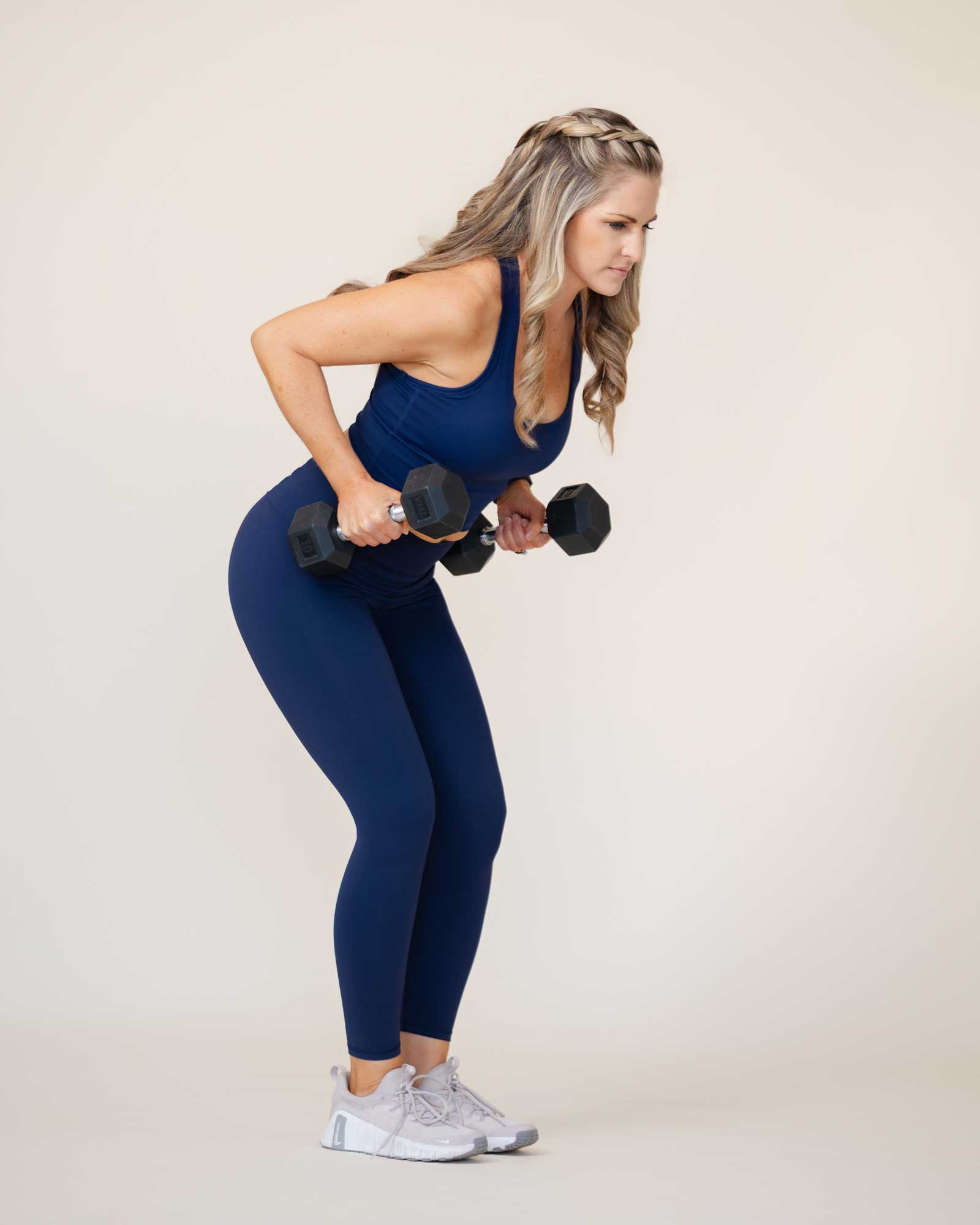
If you’ve spent any time researching how to navigate perimenopause and menopause, chances are you’ve heard this advice:
You need to lift heavy.
It’s one of the most common recommendations women hear during midlife, and for good reason. Strength training plays an important role in maintaining muscle mass, building strength, supporting bone health, and helping us stay strong and capable as we age.
But here’s the problem: What does lifting heavy actually mean?
Does it mean picking up the heaviest dumbbells you can lift? Does it mean lifting heavier weights with fewer repetitions? Should you be struggling through every set? And how do you know if the weights you’re currently using are challenging enough?
If you’re a woman in your 40s, 50s, or beyond who heard the mantra “low weight high rep” to “tone” years ago, spent your 20s in barre studios or Sculpt classes, or followed workouts that focus on “toning” versus strength, the lifting-heavy narrative that’s everywhere now can feel confusing, intimidating, or even a little overwhelming.
Let’s get into it, because lifting heavy doesn’t have to be complicated, and it certainly doesn’t mean you need to become a power lifter or buy new weights every month.
It means learning how to challenge your muscles, progressively get stronger, and give your body a reason to maintain and build the muscle and strength that will serve you for decades to come.
Why lifting weights becomes so important in midlife
As women move towards or through perimenopause and menopause, changes in estrogen levels can influence several aspects of our health, including muscle and bone health.
We naturally lose muscle as we age, and the menopause transition is a key time to focus on maintaining muscle mass and strength.
Muscle isn’t just about how our arms or legs look. It’s functional. It’s what helps us:
- Carry groceries, lift suitcases, and pick up the kids in our lives.
- Get up and down from the floor with ease.
- Maintain balance, stability, and mobility.
- Support our joints and everyday movements.
- Maintain strength and physical independence as we age.
- Support our metabolic health.
Bone health is another very important piece of the puzzle. Bones respond to mechanical loading, and appropriately challenging resistance training can help support bone strength.
That is why strength training dominates your social feeds and is a common recommendation from your health care providers.
The goal isn’t simply to burn calories or get a sweaty workout. It’s to build a stronger body that can support you through midlife and beyond.
So, what does lifting heavy actually mean?
Here’s the simplest way to think about it:
Lifting heavy means using a weight that challenges your muscles enough to work hard while still letting you maintain good form and control throughout the exercise.
But here’s what I want you to understand: Heavy is relative.
A weight that feels heavy for one woman might feel easy for another. Your training experience, current strength, exercise selection, and physical abilities all contribute to what lifting heavy means for you.
For example, a 15-pound dumbbell might be challenging for someone new to strength training, while another woman might comfortably squat 40 or 50 pounds. Both are lifting heavy for where they are today. And both are getting the challenge they need to stimulate adaptations and build strength.
The goal is to challenge your muscles enough to stimulate progress, not to lift a certain number of reps, a certain percentage of your one-rep max, or to keep up with trainers or women you see online.
Does lifting heavy mean doing fewer repetitions?
Not necessarily.
You may have heard that heavy lifting means doing 5-8 repetitions with a heavier weight, while lighter weights mean doing 15-20 repetitions. While there is some truth to this, it oversimplifies a more nuanced process.
Different repetition ranges can help build strength and muscle. That is exactly why I include so many different types of workouts in your programs and remind you constantly that there are different ways to achieve progressive overload. The weight you choose should match the number of repetitions you’re performing and how challenging those repetitions feel.
For those just getting started with strength training, a good starting point is:
- 8-12 repetitions per set (which is usually comparable to a 30-40 second interval)
- Being able to complete 2-3 sets of each exercise with good form
- A weight that makes the final few repetitions challenging.
- Enough rest between sets to maintain good technique and performance.
As you become stronger and more experienced, you can explore heavier weights and different repetition ranges. The goal is to be challenged, not hit a magic number of reps.
And the most important thing? Maintain good form and quality movement with the weights you choose.
Understanding progressive overload: The secret to getting stronger
This is one of the most important concepts in strength training, and I know you’re hearing it everywhere!
Progressive overload is the gradual increase in the demands placed on your muscles over time so your body keeps adapting, building strength, and getting stronger.
When you first start lifting weights, even a relatively light weight might feel challenging. Your muscles aren’t accustomed to that level of resistance. But as you repeat the exercise over the coming weeks, your body adapts. The weight that once felt difficult starts to feel easier.
That’s a good thing! It means you’re getting stronger. And… it’s a sign your body needs a different stimulus to keep adapting and changing. If you continue using the same weight, repetitions, and level of effort forever, you may eventually stop seeing the same results—whether that’s improvements in strength, mobility, body composition, fat loss, improved energy, or anything else.
That doesn’t mean you have to buy a whole new rack of weights or completely change your workouts, but to keep progressing, you need to increase the challenge gradually.
What does progressive overload look like in real life?
As I always say, there are several ways to challenge your muscles progressively.
1. Increase the weight.
If you’ve been doing squats with 15-pound dumbbells and can now comfortably complete all your sets and repetitions, you might be ready to try 20-pound dumbbells!
2. Increase your repetitions.
If you started with 8 repetitions, work toward completing 10 or 12 with the same weight before increasing the load. You know I love “endurance sets” for exactly this!
3. Increase your “time under tension”
Slow your movements with tempo sets, add isometric holds at the end of a movement or set, or do half reps to keep your muscles under tension and load for longer.
4. Improve your range of motion.
As your strength and mobility improve, you may be able to perform an exercise through a greater, more comfortable range of motion. Get a little lower in that squat or lunge, or a little higher in your row or press.
5. Improve control and technique.
Better control, stability, and movement quality can also represent meaningful progress.
The key is to gradually increase the training stimulus rather than constantly making every workout harder.
How do you know if you’re lifting heavy enough?
This is probably the question I hear most often.
You might be using 5-pound dumbbells in a workout and wondering if they’re actually doing anything. Or maybe you’ve been using the same 10-pound weights for months and aren’t sure whether to increase them.
One of the easiest ways to assess how challenging a weight is is something called reps in reserve (RIR).
RIR means how many more repetitions you believe you could complete at the end of a set while maintaining good form.
For example:
- 5 reps in reserve: You finish your set and feel like you could easily do another 5 repetitions.
- 2 reps in reserve: You could complete approximately 2 more repetitions.
- 0 reps in reserve: You cannot complete another repetition with proper technique.
For many women looking to build muscle and strength, finishing a set with approximately 2-5 repetitions left in the tank is a useful target. You want the exercise to feel challenging, especially toward the end of the set, without pushing yourself to complete exhaustion.
And despite what you may be hearing on social media, you do NOT need to train to failure every time you lift weights.
In fact, current resistance-training research indicates that training for momentary muscular failure isn’t necessary to improve strength or build muscle. The goal is to work hard enough to create a meaningful stimulus while maintaining good movement quality.
Your quick checklist: Are you lifting heavy enough?
Use this checklist during your next strength workout.
- The last few repetitions feel challenging. The first few reps may feel manageable, but the final 2-3 should require noticeably more effort.
- You have approximately 2-3 reps left in reserve. You could do a couple more repetitions, but not 5 or 6 more.
- You can maintain good form. Your technique doesn’t fall apart, even when the weight is challenging.
- You’re not relying on momentum. You’re controlling the movement rather than swinging, bouncing, or using other muscles to compensate.
- You’re feeling the intended muscles working. The exercise is challenging the muscles you’re trying to train, rather than causing discomfort in your joints.
- You’re recording your weights and repetitions. You know what you lifted last time and can see whether you’re gradually progressing.
- Your weights aren’t staying the same forever. As exercises get easier, you look for opportunities to increase repetitions, resistance, or another training variable.
- You’re recovering between workouts. You can return to your next session feeling ready to train again.
If you finish every set feeling like you could easily do another 8-10 repetitions, it’s probably time to consider increasing the challenge.
On the other hand, if you’re struggling to complete the repetitions, losing your form or holding your breath to get through the movement, the weight may be too heavy right now.
Remember: Challenging doesn’t mean uncontrolled.
Practical tips to start lifting heavier
If you’re used to lighter weights or higher-repetition workouts, you don’t need to overhaul your entire routine overnight.
Start where you are and build from there.
1. Don’t be afraid of increasing your weights.
Many women stick with the same set of dumbbells for years because they worry about getting bulky or hurting themselves. Yes, even 20 years into my training career, this is still a concern for women, even though we’ve been told (and research shows) this doesn’t happen.
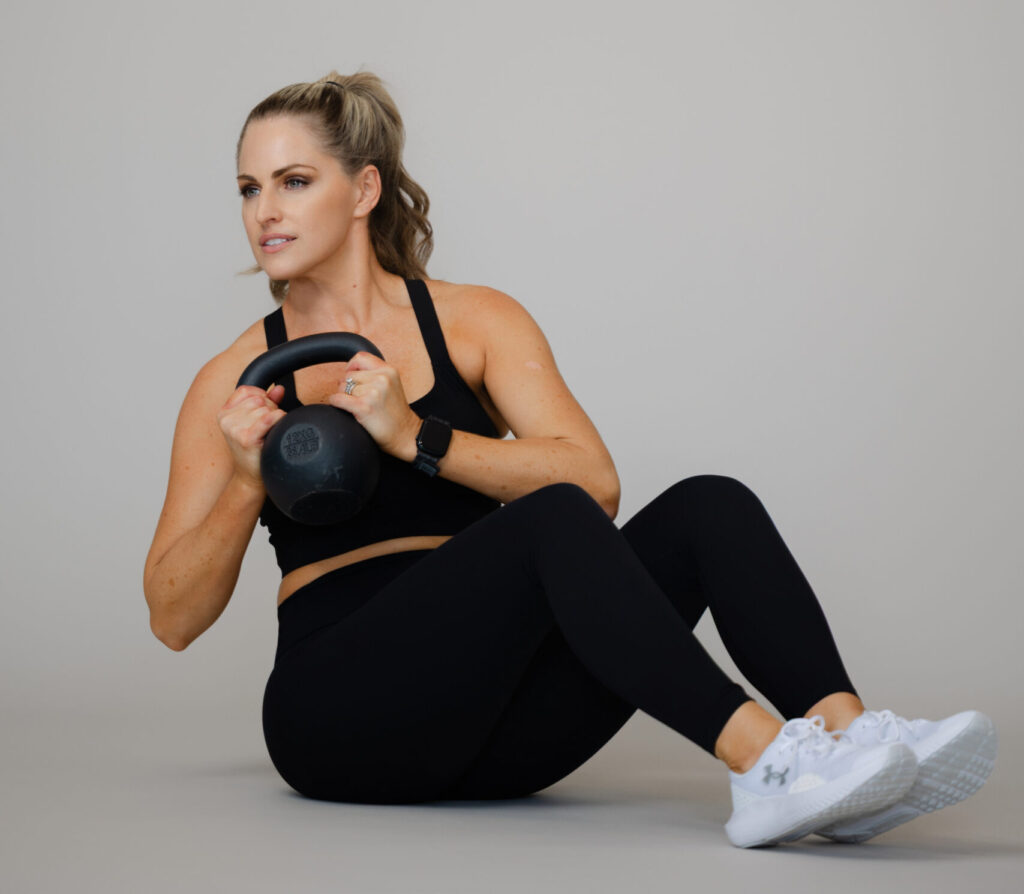
Don’t be afraid to progress and upgrade! If you can comfortably complete your prescribed repetitions with good technique and still have plenty left in the tank, it’s time to increase. Maybe that’s using your heavier kettlebell for a dumbbell workout, or ordering the next size weight for your next workout.
2. Track your workouts.
This is one of the simplest ways to make sure you’re progressing. And one of my favorite things about the workouts in the BodyFit by Amy app!
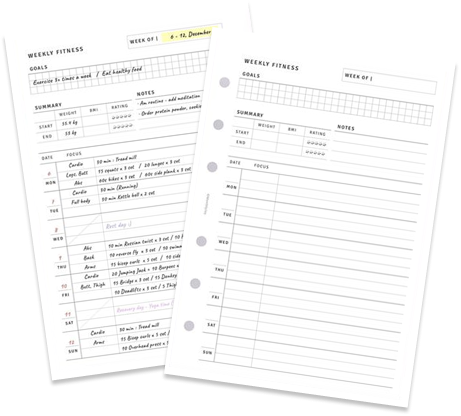
Keeping an online calendar and notes on what you lifted, how much, and how you felt can help you figure out the best timeline for progress.
3. Prioritize compound foundational movement patterns.
Compound exercises work multiple muscle groups at once and let you build strength efficiently—and they’re in every workout I make for you!
Examples include:
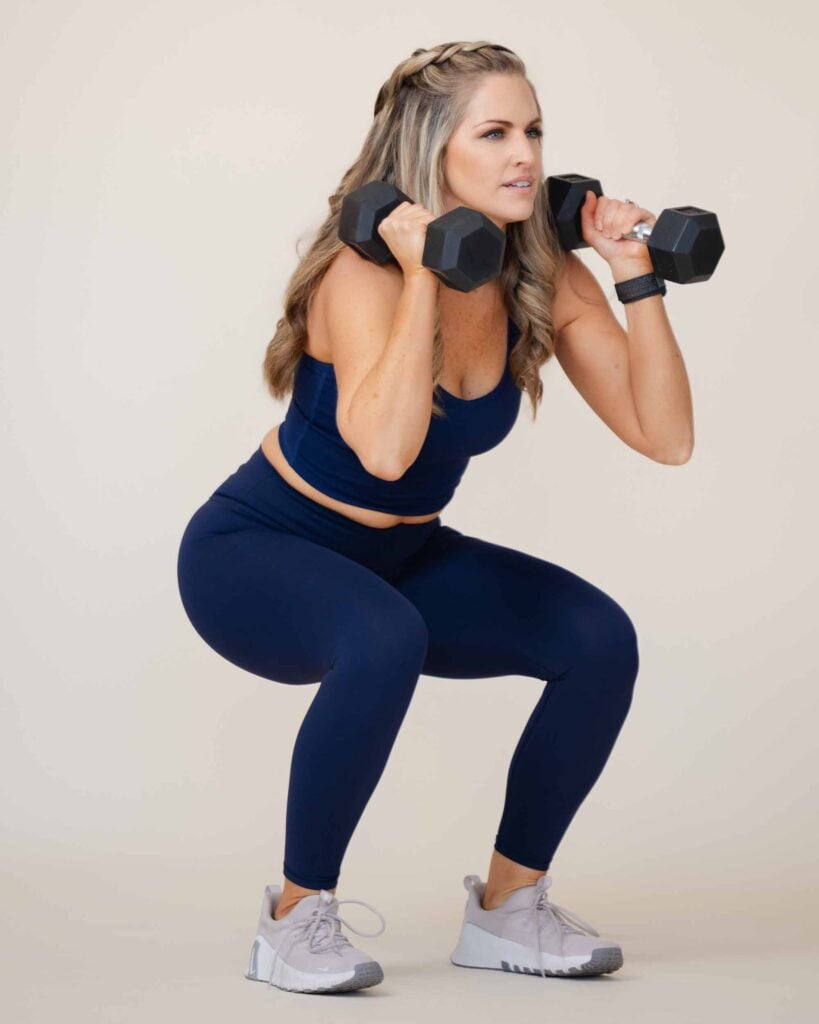
- Squats.
- Deadlifts and hip hinges.
- Lunges and step-ups.
- Chest presses.
- Rows.
- Overhead presses.
You don’t need to do all of these in every single workout, but incorporating a variety of pushing, pulling, squatting, and hinging movements can help you build full-body strength. And good news: you don’t have to plan this out yourself—I’ve got you covered!
4. Give yourself enough rest between sets.
You’ve heard me say it: rest is part of the process.
If you’re lifting challenging weights, your muscles need time to recover so you can perform the next set with good technique. Working in circuits (where one muscle group gets a break while the others work) and allowing time between sets and circuits is crucial.
5. Don’t confuse being exhausted with having a good strength workout.
A great strength workout doesn’t have to leave you dripping in sweat or completely wiped out. Your goal is to stimulate your muscles, improve your strength, and recover well enough to keep showing up consistently.
Quality matters more than how exhausted you feel afterward.
6. Give yourself permission to start lighter.
Yep, I said it, and I say it often. Everyone is on their own journey, so be where you are today. If you’re new to lifting, returning after a break, or managing joint discomfort or recovery, start with weights you can handle safely. Learn the movement, develop confidence and gradually increase resistance.
7. Be consistent.
This is truly the most important part of your journey. Everything we talk about when it comes to weights, sets, reps, overload, is important, but the bottom line is showing up and finding a strength training program that fits your lifestyle is what really matters.
A final word: You don’t need to be afraid of lifting heavy
If there’s one thing I want you to understand, it’s this:
Lifting heavy isn’t about lifting the heaviest weight possible. It’s about becoming stronger than you were yesterday.
It’s about challenging your body in a way that encourages your muscles and bones to adapt, while building the strength you need for everyday life.
You can start at any age. You can start with 5-pound dumbbells, resistance bands or your own body weight. What matters is starting with an appropriate challenge and gradually building from there.
Don’t be afraid to pick up heavier weights as you get stronger. Don’t assume that your workouts are effective simply because you’re sweating or doing lots of repetitions. And don’t underestimate what your body is capable of.
Knowing how and why to lift heavy is the focus of our current LIFT challenge in the BodyFit Athletic Club. Beyond the curated program of workouts and progressions, you’ll also get nutrition support, The Method nutrition guide, recipes and meal plans, weekly livestreams, Q&As, and guidance from a fitness expert and a nutrition expert!Join the LIFT challenge in the BodyFit Athletic Club.
And if you’re feeling stuck in a rut or unsure how to fit these “heavy” workouts into your routine, consider adding one or more to your weekly strength routine.
Back to Basics: Back to Basics with Weights
Tempo Training: Dumbbell Tempo Training
Isometrics: Dumbbell Iso Strength
Compound Exercises: Total Body Compounds
Muscle Endurance: Full Body Flow & Burn
This post is for general education and isn’t medical advice. Talk with your healthcare provider before starting a new exercise program, especially if you have an injury or health condition.

Leave a Reply