


The short answer? Yes. But probably not for the reason you think.
“If your goal is calorie burn, cardio is the answer”
“I need to do more cardio actually to see changes in my body”
“I know I should be running for weight loss”
These are all things I’ve heard repeatedly over my 20+ years in the fitness industry– both from the industry itself and from clients. Cardio, short for cardiovascular exercise, is exercise that increases your heart rate and respiration, increasing oxygen and blood flow throughout your body. The term “cardio” has been around for years, and for a long time, it was thought to be the best exercise for weight loss, the way to “burn the most calories,” and the key to getting lean and not bulky.
This is absolutely a “Yes, and” moment, so as your resident “Yes, and” trainer, I’m here to break it down for you.
If your goal is better health, improved fitness, more energy, and a stronger, more capable body, cardiovascular training absolutely deserves a place in your routine. But if your goal is fat loss or changing your body composition, there is a common misconception that can send you down the wrong path:
More cardio does not automatically mean better results.
You don’t need to spend hours on the treadmill, finish every workout drenched in sweat, or chase the highest possible calorie burn to make progress. In fact, constantly adding more and more cardio—especially when you’re already training hard—can leave you exhausted, compromise recovery, and take away from the strength training that is also incredibly important for changing your body composition. I’ve discussed this in depth recently for our UNPAUSE program in the BodyFit Athletic Club. Often, when people see bodily changes during midlife years, especially in the mid-section, we chalk it up to changing hormones and a slowing metabolism, and decide more cardio and less food is the answer. That can often work against us. But neglecting cardiovascular training completely isn’t the answer, either.
Do we need cardio? My answer is a very enthusiastic:
YES, to cardio. AND to strength. Let’s talk about why you need both.
Why cardio matters
First, let’s give cardio the credit it deserves. Cardiovascular exercise trains your heart, lungs, and circulatory system to deliver oxygen to your working muscles more efficiently. Over time, this can improve your cardiorespiratory fitness—often measured through things like VO₂ max. And cardiorespiratory fitness isn’t just about being able to run farther or climb stairs without getting winded. It’s strongly associated with long-term health.
A 2024 overview of 26 systematic reviews, representing more than 20.9 million observations from 199 cohort studies, found that cardiorespiratory fitness is a strong and consistent predictor of morbidity and mortality. Higher fitness was associated with a substantially lower risk of all-cause mortality. That’s a pretty compelling reason to care about your cardiovascular fitness. Cardio can also support:
- Heart and cardiovascular health
- Blood pressure and metabolic health
- Aerobic capacity and endurance
- Your ability to perform everyday activities
- Recovery between efforts
- Energy and stamina
- Mental health and mood
- Overall physical function as you age
And you don’t have to become a marathon runner to get these benefits. Walking, cycling, swimming, rowing, hiking, dancing, jogging, interval training, and yes, MRT (metabolic resistance training) and many other forms of movement can all contribute to cardiovascular fitness.
Current U.S. Physical Activity Guidelines recommend adults accumulate 150–300 minutes of moderate-intensity aerobic activity per week, or 75–150 minutes of vigorous activity, along with muscle-strengthening activity on at least two days per week.
Notice something important there? The recommendation isn’t cardio OR strength.
It’s cardio AND strength.
But is cardio the best way to lose fat?
Cardio burns calories. That’s true. But all movement burns calories. And quite often, our heart rates rise more during strength training and power training than in cardio alone. Think about carrying a full laundry basket up the stairs or toting a toddler and diaper bag across the park— Moving something heavy through space taxes your cardiovascular system in similar ways.
And, burning calories during a workout isn’t the same thing as creating the body composition you want.
If your goal is to lose body fat while maintaining or building muscle, your training needs to account for more than the number displayed on your treadmill, watch, or exercise bike. Resistance training gives your body a reason to maintain and build lean tissue.
A 2021 systematic review and meta-analysis of 58 studies found that resistance training in healthy adults can improve body composition, including reductions in body fat percentage, fat mass, and visceral fat. Another meta-analysis involving 65 trials and more than 2,500 adults with overweight or obesity found that resistance-based exercise was associated with reductions in fat mass while also increasing lean mass. That’s an important distinction. The goal isn’t necessarily to make the number on the scale go down as quickly as possible. The goal might be to have:
- Less body fat
- More or maintained muscle
- Greater strength
- Better fitness
- A body that feels capable and resilient
That’s body composition, and strength training is a major part of that equation.
Cardio isn’t the enemy of fat loss—but more isn’t always better.
This doesn’t mean cardio doesn’t help with fat loss. It absolutely can. The truth is: no single form of exercise automatically wins the fat-loss game. Your overall training volume, nutrition, recovery, consistency, and ability to sustain the program all matter. And this is where I think we need to move away from the idea that every workout needs to be about “How many calories can I burn?”
This is also where I’ll point out that calorie burn is often the least accurate metric on your smartwatch or fitness tracker. I love data, but this is one area I want you to focus less on.
Your body doesn’t experience exercise as a simple math equation. It’s more complex than that.
When “more cardio” can work against you
Imagine you’re already strength training several days a week. You’re progressively challenging your muscles, doing your workouts consistently, and walking throughout the day. You’re also eating in a way that supports your goals.
And then you decide:
“Maybe I just need to add another hour of cardio every day.”
So now you’re training more, eating less, sleeping poorly because you’re exhausted, and showing up to your strength workouts with less energy. That’s not necessarily a better plan. It’s just more stress. Training is a stressor. Recovery is where your body adapts to that stress. (I just covered this last week!) If you’re constantly trying to maximize calorie expenditure without considering recovery, you can compromise the quality of the training that actually helps you build and maintain muscle.
Research on concurrent training—the combination of endurance and resistance training—has identified a potential “interference effect,” particularly when endurance training becomes very frequent or prolonged. The effect is not as simple or dramatic as social media sometimes makes it sound. Still, higher endurance volume and frequency can interfere with some strength, power, or hypertrophy adaptations in certain circumstances.
More recent evidence is actually reassuring: an umbrella review of 17 meta-analyses found that combining resistance and endurance training can improve aerobic capacity while producing strength, power, and hypertrophy outcomes comparable to resistance training alone in many circumstances.
So the takeaway isn’t: “Don’t do cardio.”
It’s: “Don’t assume you need endless cardio.”
You can train your heart during strength workouts, too.
Here’s another piece of the puzzle that often gets overlooked.
Cardiovascular training doesn’t only happen when you get on a treadmill for 30 minutes or do a kickboxing or cardio-specific workout video. Your heart responds to the overall demands you’re placing on your body. A well-designed strength workout can become quite cardiovascular when you use movements that recruit a lot of muscle mass, structure exercises into circuits, manage rest periods intentionally, or incorporate metabolic conditioning.
That’s where you’ll see things like MetCon (metabolic conditioning) showing up in almost all of my strength workouts! Remember what I said above about how much your heart pumps when you move heavy things through space? This is it? A metcon workout typically combines movements in a way that challenges both your muscular and cardiovascular systems.
If you’ve done any of my workouts, you’ve likely felt this in your body! You’re still strength training. But your heart and lungs are working hard, too. See also: HIIT (high-intensity interval training). Another one of my favorite formats! HIIT alternates periods of higher-intensity effort with recovery periods. And it can be a very effective way to improve cardiorespiratory fitness without requiring hours of traditional steady-state cardio.
So when you finish a strength workout with a short, appropriately programmed HIIT or metcon block and your heart rate is elevated, that counts as cardiovascular work. It doesn’t mean every strength workout needs to become a HIIT workout. And it doesn’t mean steady-state cardio or “Zone 2” cardio doesn’t also have a place in your routine – it absolutely does.
It means we have more than one way to train your cardiovascular system.
So… how much cardio do you actually need?
There isn’t one perfect number for everyone. Your ideal amount depends on your goals, current fitness level, schedule, recovery capacity, preferences, and the other training you’re doing. As I will always remind you, we are all on our own journeys. Some of you may have cardio-specific goals— training for a 5k, competing in a race, feeling better in daily activities, or playing a sport with friends. Others may be looking for general fitness and improved health, or body recomposition goals.
Your cardio can come from dedicated cardio sessions, recreational activities, walking, sports, intervals, and even appropriately designed portions of your strength workouts. And if you’re already combining strength training with metcons, HIIT, and a dedicated cardio session, you may be getting considerably more cardiovascular stimulus than you realize. And if you’re following my workout programs — either on YouTube or in the BAC — this dynamic is already built into your schedule.
This is why I believe in “yes, and”
I don’t want you to walk away from this thinking cardio is unnecessary. Quite the opposite. Cardio is important. Your heart is a muscle. Your cardiovascular system deserves training. Improving your cardiorespiratory fitness is one of the best things you can do for your long-term health. But I also don’t want you to believe that cardio is the only path to results. Yes, do cardio. And strength train.
Yes, improve your cardiovascular fitness. And build muscle. Yes, move your body and burn calories. And give your body enough fuel and recovery actually to adapt. Yes, have a dedicated cardio day. And recognize that your strength workouts can challenge your cardiovascular system, too.
That’s the philosophy behind how I structure my fitness programs.
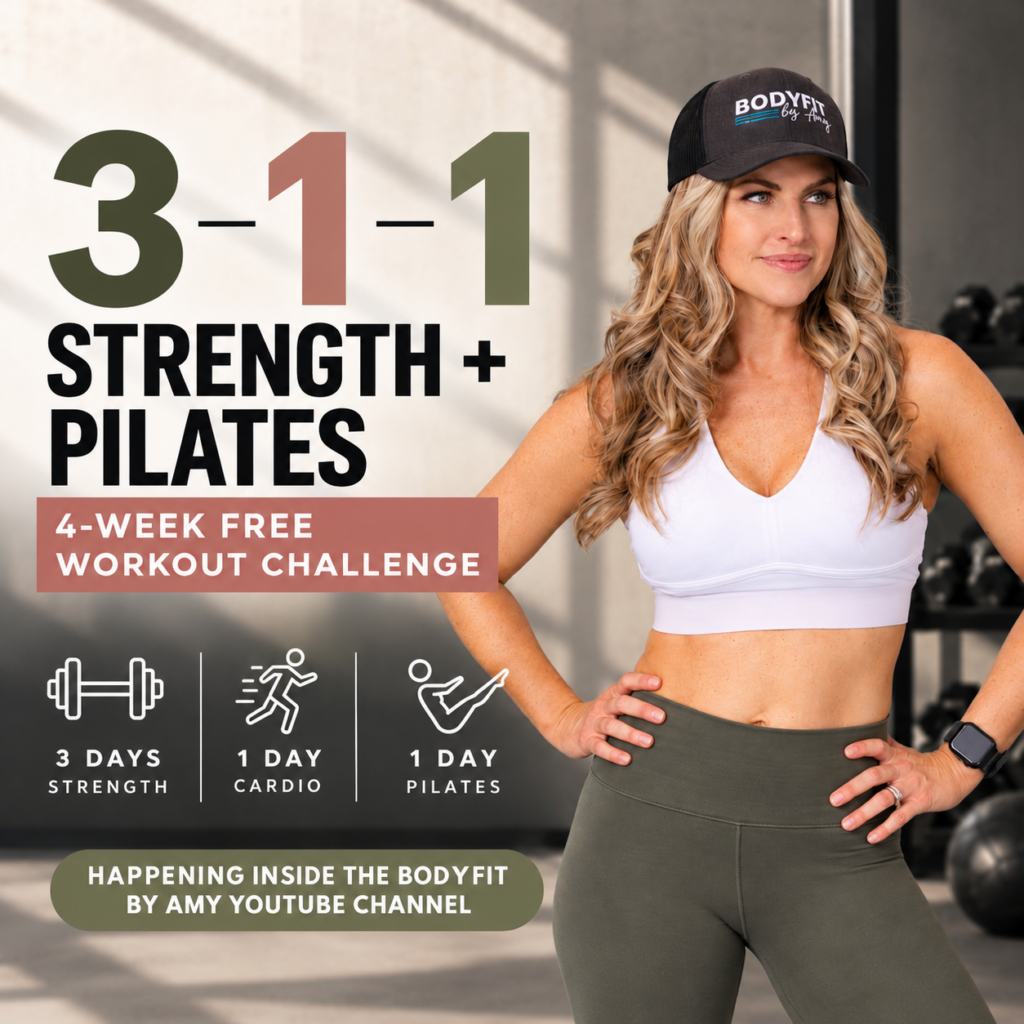
My programs include a dedicated cardio day because cardiovascular fitness matters. But cardio isn’t isolated to that one day. Many strength workouts also incorporate metabolic conditioning and/or HIIT, giving you opportunities to challenge your heart and lungs while you build strength, muscular endurance, coordination, and overall fitness.
The goal isn’t to exhaust you to burn more calories. The goal is to create a well-rounded training program that your body can actually recover from and that you can consistently follow.
The bottom line
Do you really need cardio? Yes.
But you probably don’t need endless cardio. If your goal is better health, fitness, and body composition, think beyond the calorie counter. Train your cardiovascular system. Build and maintain muscle. Get stronger. Challenge your heart and lungs. Move throughout your day. Recover. And give yourself enough variety so that your training supports your life rather than leaving you constantly exhausted.
Because the best training program isn’t the one that burns the most calories in a single workout. It’s the one that helps you become stronger, fitter, healthier, and more capable—and that you can keep doing consistently. Cardio isn’t the enemy. Strength isn’t the alternative. You need both.
Research references:
- Lang et al. (2024), Cardiorespiratory fitness is a strong and consistent predictor of morbidity and mortality among adults. PubMed
- Wewege et al. (2022), The Effect of Resistance Training in Healthy Adults on Body Fat Percentage, Fat Mass and Visceral Fat: A Systematic Review and Meta-Analysis. PubMed
- Kang et al. / related concurrent-training evidence on resistance + endurance training and body composition. PubMed
- Wilson et al. (2012), Concurrent training: a meta-analysis examining interference of aerobic and resistance exercises. PubMed
- Poon et al. (2024), High-intensity interval training and cardiorespiratory fitness in adults: An umbrella review of systematic reviews and meta-analyses. PubMed
- U.S. Department of Health and Human Services, Physical Activity Guidelines for Americans. Health.gov+1







Leave a Reply