

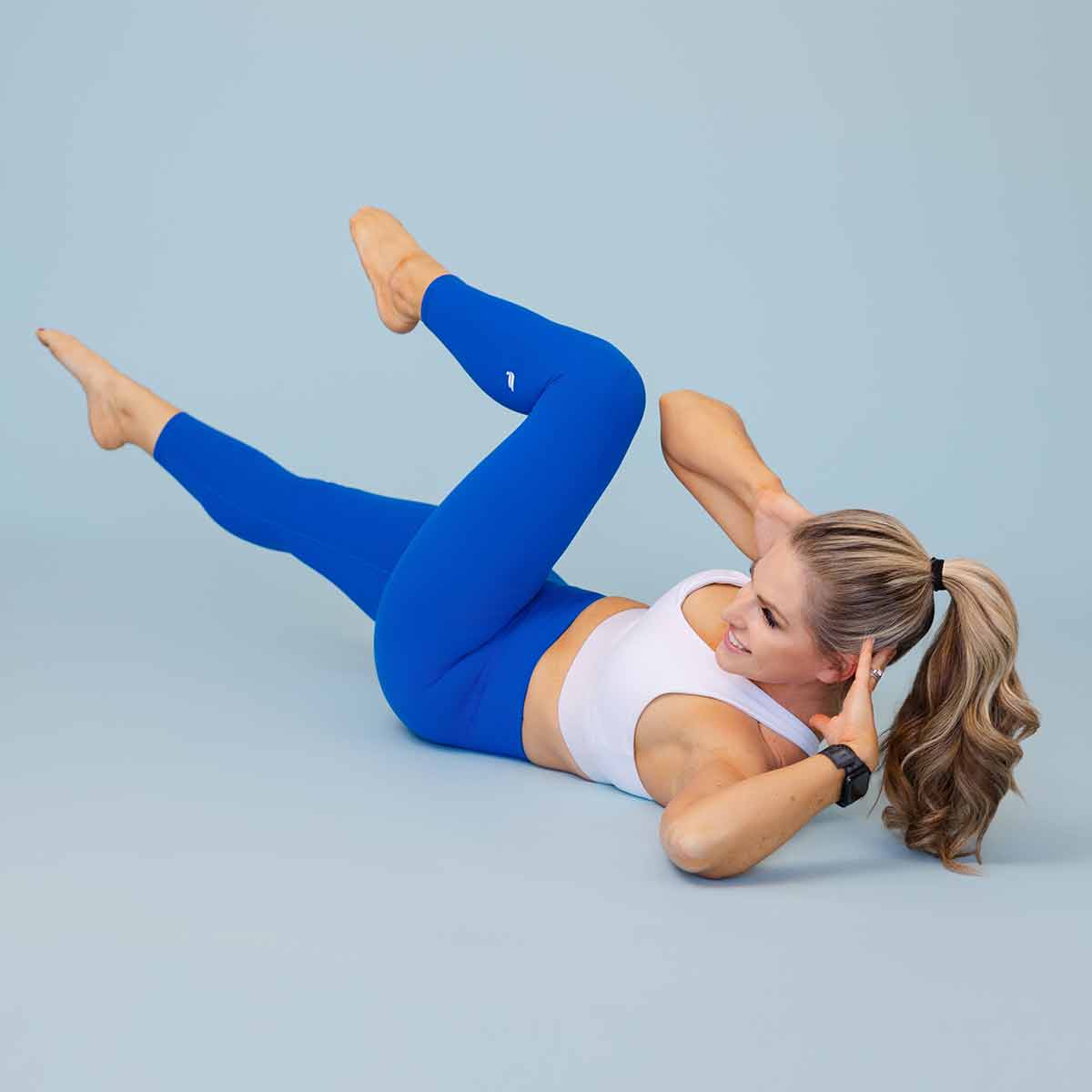
Strength training and Pilates are dominating your social feed right now—and if your algorithm is anything like mine, you are definitely not alone.
As a trainer who has always loved and taught both, I get the hype. One of my first YouTube videos to go viral was my 30 Minute Mat Pilates workout (a true blast from the past, and honestly, still such a good burn), and you already know how much I love lifting heavy things.
You’ve also probably heard me talk a lot about the importance of building strength and muscle, especially recently as we launched the full UNPAUSE program in the BAC.
So naturally, one question comes up again and again:
Is strength training or Pilates better for building muscle and getting stronger?
The answer is a little more nuanced than you might think.
Both strength training and Pilates can improve strength, muscular endurance, mobility, body awareness, and physical function. But they train the body differently and tend to emphasize different adaptations.
And the good news? You don’t have to choose.
Let’s break it down.
Beyond the Hype: Why Strength Training Matters
For women in particular, fitness culture is shifting in a much-needed way.
For decades, the emphasis was often on being as small as possible. Today, more women are recognizing the importance of building and maintaining muscle for healthy aging, bone health, physical function, and long-term health.
While weight loss remains a goal for many people, fitness doesn’t have to center on shrinking your body.
Muscle is metabolically active tissue, and maintaining muscle mass becomes increasingly important as we age. Resistance training can also support bone health, strength, and our ability to perform everyday activities more easily.
In other words, the goal doesn’t have to be simply smaller.
It can be stronger, more capable, and more resilient.
That’s one reason strength training has become such a major focus in women’s fitness—and why you’re probably seeing a lot more content about muscle on your social feed.
But then there’s Pilates.
Pilates is often associated with smaller, controlled movements, core strength, flexibility, and that infamous burn.
So how do the two actually compare?
What Is Strength Training?
Strength training, also called resistance training, is exercise in which your muscles work against resistance.
That resistance might come from:
- Dumbbells
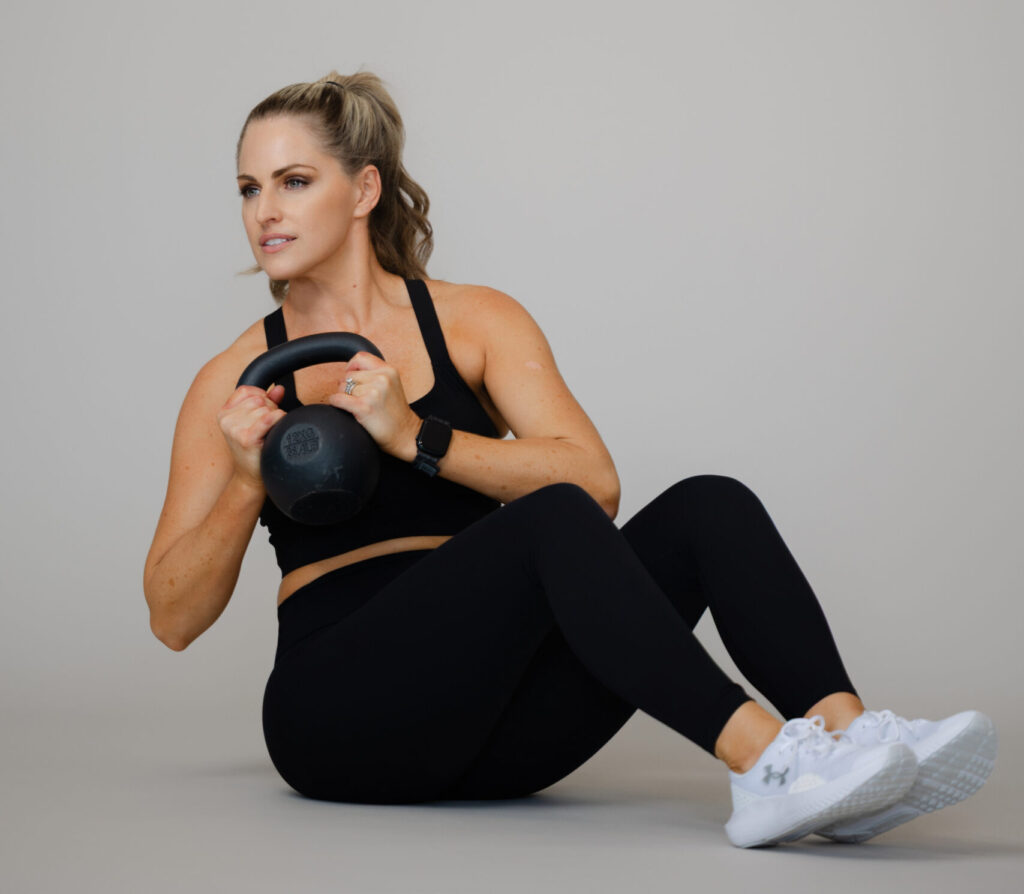
- Kettlebells
- Barbells
- Weight machines
- Cables
- Resistance bands
- Your own bodyweight
The defining principle is progressive overload: gradually increasing the challenge your muscles face over time.
That might mean increasing the weight, repetitions, sets, range of motion, or exercise difficulty.
As your body adapts to that increasing demand, you can develop greater muscular strength and, with proper training and nutrition, increase muscle size.
Traditional strength training often includes our primary movement patterns, including:
- Squats
- Hinges
- Lunges
- Upper-body pushes and presses
- Upper-body pulls and rows
- Carries
- Rotation and anti-rotation
What Are the Benefits of Strength Training?
One of the clearest benefits of resistance training is its ability to increase muscular strength.
Research also supports resistance training as an important tool for maintaining and improving bone health. For example, systematic reviews and meta-analyses have found improvements in muscular strength and measures of bone mineral density following progressive resistance training, particularly in older adults.
Other potential benefits include:
- Improved muscular strength
- Support for bone health
- Improved body composition
- Better physical function
- Increased capacity to perform everyday activities
- Improved muscular power and physical resilience
And perhaps most importantly, strength training gives you a measurable way to challenge your body and continue progressing over time.
What Is Pilates?
Pilates is a form of exercise centered around controlled, intentional movement.
Traditional Pilates emphasizes principles such as concentration, control, breathing, precision, and efficient movement. Depending on the style, You can do Pilates on a mat or with specialized equipment such as the Reformer or Cadillac.
Many Pilates exercises require you to stabilize your trunk while moving your arms and legs. This challenges your core and back muscles while also working the hips, shoulders, and other areas of the body.
I often describe Pilates as “strength and stretch” when I teach it. And yes, we hear a lot about the Pilates powerhouse and core strength—but Pilates is so much more than that. Anyone who has experienced the slow burn of a challenging Reformer class can attest: Pilates is hard. It absolutely can build strength. But that doesn’t necessarily mean it’s doing the exact same thing as progressively lifting heavier weights.
Strength Training vs. Pilates: What’s the Difference?
The biggest difference isn’t simply the equipment. It’s the type of strength and physical adaptations each method emphasizes. Strength training generally prioritizes your ability to produce force against resistance.
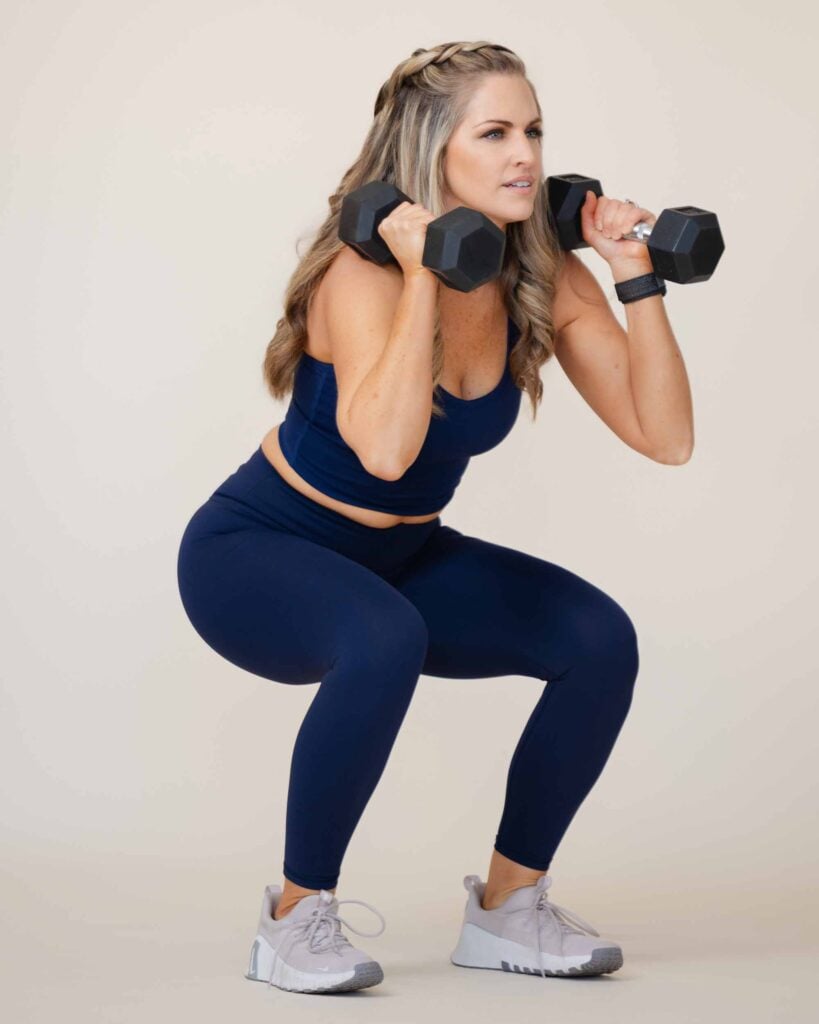
For example, if you’re progressively loading a squat, one goal may be to eventually squat more weight. Over time, that progressive resistance can help you develop greater strength and muscle.
Pilates generally places greater emphasis on:
- Movement control
- Muscular endurance
- Stability
- Coordination
- Body awareness
- Precision
- Mobility
That doesn’t mean Pilates doesn’t build strength.
It does.
And it doesn’t mean strength training can’t improve endurance, stability, coordination, or movement control.
It can.
The difference often comes down to how you apply the challenge and what you’re trying to improve.
Here’s one way to think about it:
Strength training asks:
How much force can my muscles produce?
Pilates asks:
Can I control my body efficiently while producing and resisting force?
There is plenty of overlap. The emphasis is just different.
Can Pilates Build Muscle?
Yes—but there is an important distinction. Pilates can challenge your muscles and improve strength, particularly muscular endurance and control. Reformer Pilates, in particular, uses spring resistance and body positioning to create a significant muscular challenge.
However, if your primary goal is maximizing muscle growth or increasing maximal strength, traditional resistance training generally offers a more direct, measurable way to progressively overload your muscles.
That’s because it’s relatively easy to track and increase external resistance over time. For example, you can progress from a 20-pound dumbbell to a 25-pound dumbbell, or increase the number of repetitions or sets you’re performing. Pilates can absolutely be challenging and build strength. It just approaches the challenge differently.
What About Core Strength?
Pilates gets a lot of attention for this reason. Many Pilates exercises require the trunk to remain stable while the arms and legs move. This can challenge the core and back muscles while developing muscular endurance, coordination, and control.
But here’s something I want you to remember:
You don’t need to do Pilates to train your core.
Strength training exercises such as squats, deadlifts, carries, rows, presses, and anti-rotation exercises can all challenge your trunk muscles. You may have heard me say this in a workout before:
“Every exercise is a core exercise if you’re engaging and connecting properly.”
That’s true in both Pilates and strength training. Pilates is one incredibly effective way to train your core—but it isn’t the only way.
So, Which Is Better: Strength Training or Pilates?
It depends on your goals.
If your primary goal is building strength and muscle, strength training is generally the more direct choice. Progressive resistance makes it relatively straightforward to increase the demands placed on your muscles over time. It’s especially useful if you want to increase maximal strength, build muscle, or handle heavier loads.
If your goal is movement control, muscular endurance, stability, coordination, and body awareness, Pilates can be an excellent fit. The controlled nature of many Pilates exercises can help you better understand how you’re positioning and moving your body while challenging your muscles in a different way.
Mat Pilates can also be a great option for beginners, people looking for lower-impact movement, or anyone who wants to develop their mind-muscle connection and explore movement in a new way. And there’s absolutely no reason you can’t want both.
Why Strength Training and Pilates Work So Well Together
This is where I think the conversation gets really exciting.
Strength training and Pilates don’t have to compete. They can complement each other incredibly well.
Think about it: Strength training can help you build muscle, increase force production, and develop the capacity to handle progressively heavier loads. Pilates can help you work on control, stability, coordination, muscular endurance, mobility, and body awareness. Put those together, and you have a pretty well-rounded approach to fitness.
For example, you might:
- Strength train 2–3 days per week.
- Incorporate Pilates 1–2 days per week.
- Use your strength sessions to progressively load the major muscle groups.
- Use Pilates sessions to work on controlled movement, stability, mobility, and muscular endurance.
And you don’t necessarily need to do everything every week. Your ideal combination depends on your goals, schedule, fitness level, preferences, and what you genuinely enjoy.
The Bottom Line: You Don’t Have to Choose
The biggest misconception might be that you have to choose between Pilates and strength training.
You don’t.
Pilates can make you stronger. Strength training can improve your core stability and movement control. Both can improve physical function, and both can be adapted to different fitness levels.
The biggest distinction is that strength training tends to focus more directly on progressively increasing the force your muscles can produce, while Pilates tends to emphasize controlled movement, stability, coordination, muscular endurance, and body awareness.
For a well-rounded exercise routine, there is plenty of room for both. Ultimately, the best exercise matches your goals, challenges you appropriately, and—perhaps most importantly—is something you can do consistently.
You don’t need the perfect workout.
You need a routine that you can keep showing up for.
The goal is to show up and keep moving.
Ready to Put It Into Practice?
Want to experience how strength training and Pilates can work together in a real-world routine?
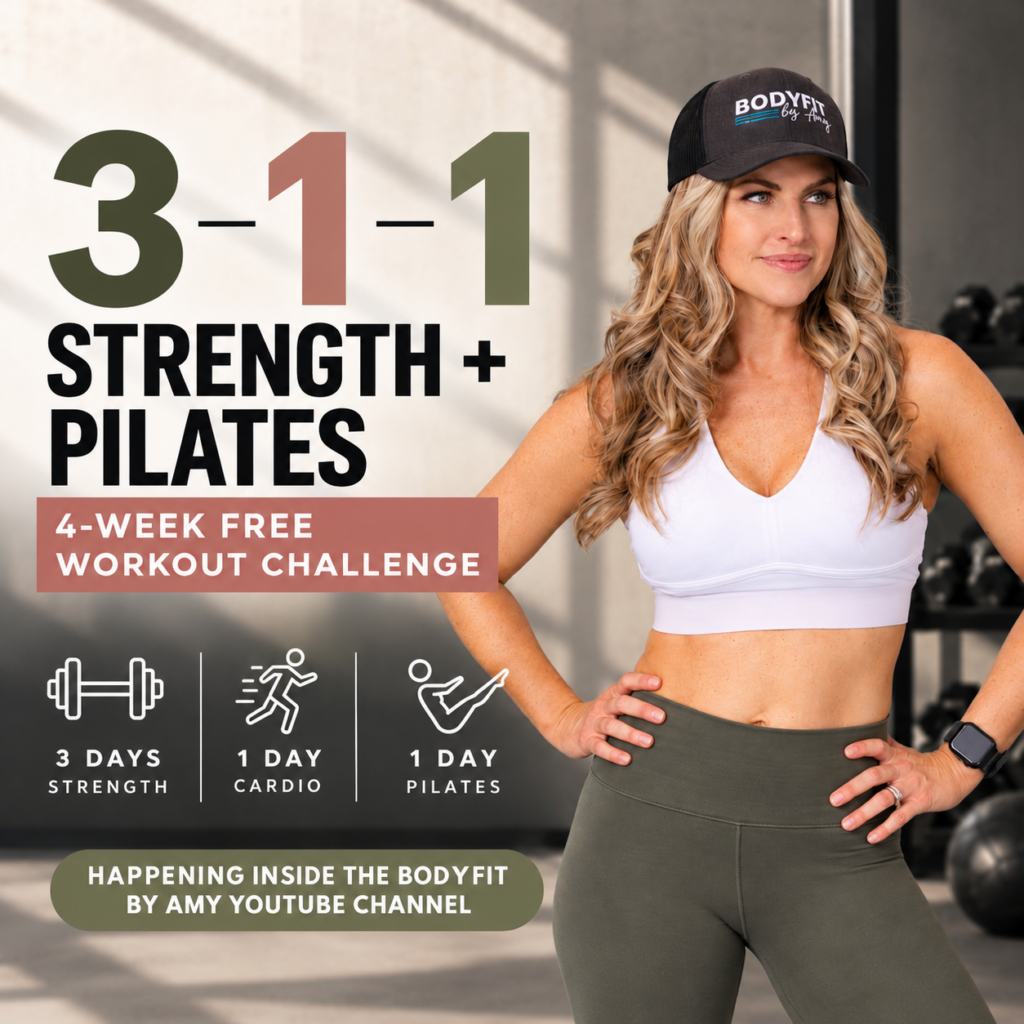
That’s exactly why I created my FREE 4-Week 3-1-1 Strength + Pilates Challenge.
You’ll get a structured combination of strength and Pilates designed to help you build strength, move well, and create a routine you can actually stick with.
JOIN my FREE 4-WEEK 3-1-1 STRENGTH + PILATES Challenge today!

Leave a Reply